Examples of Popular Automated Trading Bots (Market Overview)
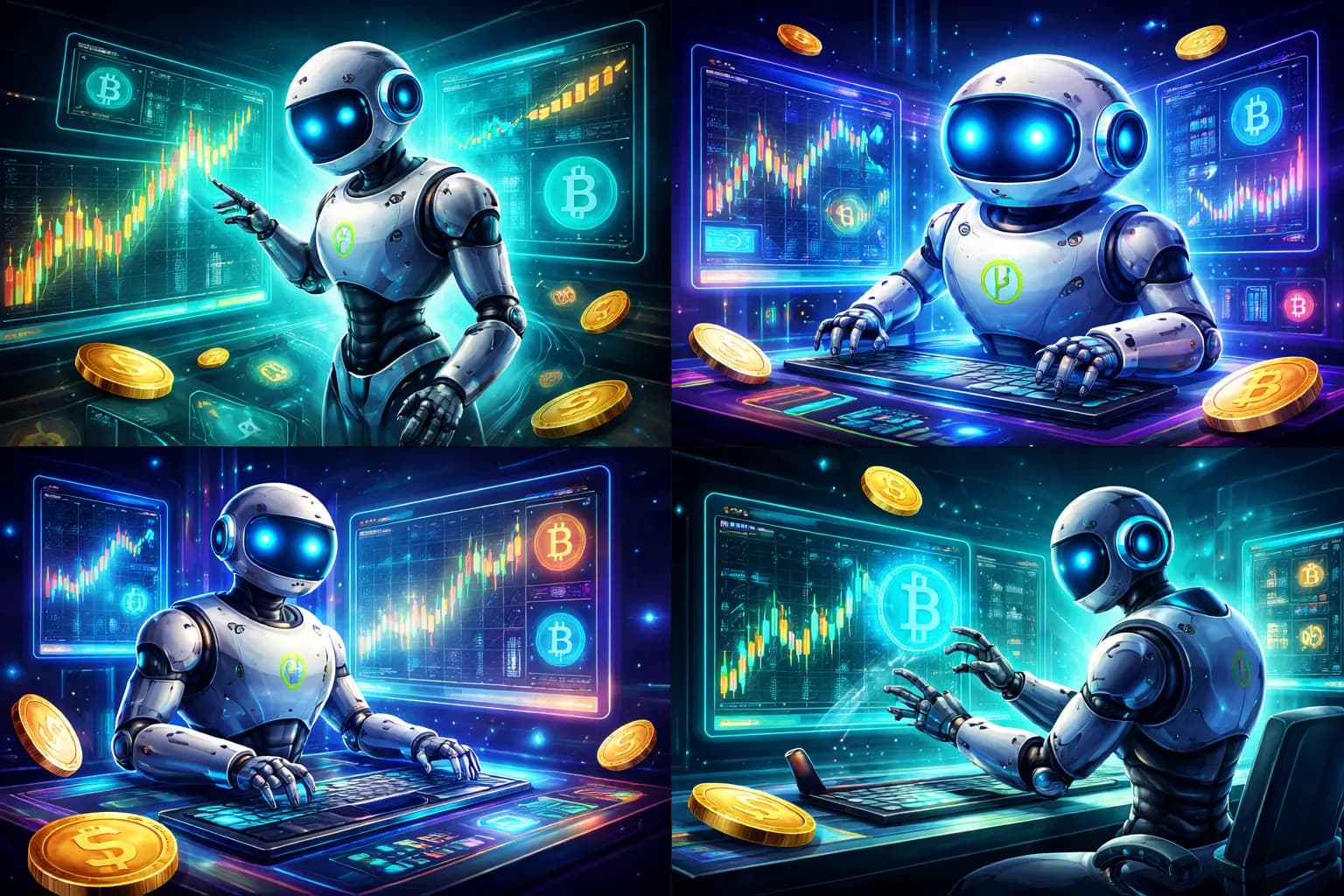
AI-Enhanced Automated Trading Bots: A Next-Generation Approach to Crypto Markets (2026)
In today’s crypto markets, successful execution is no longer just about speed — it’s about precision, data depth, and intelligent context awareness. Automated trading bots have evolved from simple rule-based order executors into dynamic systems that blend real-time market intelligence with machine learning and predictive analytics. As global trading volumes continue to expand, and on-chain data becomes more accessible, the frontier of automation increasingly intersects with AI-driven insight — enabling traders to act with both speed and informed context.
Modern trading systems draw upon a fusion of live price feeds, blockchain transaction flows, market sentiment, and behavioral signals derived from recognized wallet activity. Together, these inputs power automation mechanisms that go beyond traditional signal-trigger execution, helping traders anticipate trends, manage risk, and reinforce strategy discipline.
What Modern Automated Trading Bots Really Are
At their core, trading bots remain software programs programmed to evaluate conditions and execute trades automatically. However, the latest generation of bots do far more than react to simple rule triggers; they incorporate:
- Advanced data aggregation: collating price action, volume, funding rates, and order-book dynamics
- On-chain analytics: tracking institutional wallet flows and smart money activity
- Machine learning and AI models: identifying statistical patterns and probabilistic outcomes
- Predictive signals: forecasting volatility, sentiment shifts, and price probabilities
This evolution means bots are no longer just executors — they are decision engines that help traders operate with foresight as well as speed.
How AI and Analytics Are Transforming Crypto Automation
Historically, bots followed static scripts: buy when price crosses an indicator, sell at a predetermined threshold. But static logic struggles in volatile or regime-shifting markets. Today’s AI-enhanced systems tie bot behavior to real-time analytics and probabilistic forecasts derived from on-chain activity and emerging market signals. (nansen.ai)
For example:
- Smart money tracking can highlight when large holders begin accumulating or distributing positions — an early sign of momentum shifts.
- Predictive analytics may signal rising volatility or likely trend reversals before they appear on standard technical charts.
- Anomaly detection identifies unusual transaction patterns — such as whale unloads or liquidity shocks — enabling bots to react or stand down appropriately. (nansen.ai)
By integrating these signals, bots become more than automated order managers — they act like informed execution co-pilots for traders.
Key Components of Next-Gen Trading Automation
-
Real-Time Market Intelligence
Bots now ingest data faster and from broader sources than ever before: price feeds, derivatives markets, wallet flow datasets, liquidity metrics, and even macro signals. Amplified with AI, these datasets help bots evaluate context — not just condition — before committing capital.
-
Predictive Modeling
Rather than purely reacting to triggers, modern systems produce probabilistic forecasts about likely price behavior and risk environments. These forecasts help bots optimize entry and exit timing with a more nuanced view of expected outcomes. (nansen.ai)
-
Adaptive Execution Logic
Traditional bots execute fixed rules. Adaptive bots dynamically adjust parameters in response to:
- changing volatility
- liquidity depth
- macro market regime shifts
- evolving wallet and sentiment patterns
This adaptability can reduce wasted trades and improve capital efficiency.
-
Human-in-the-Loop AI Review
While autonomous execution is powerful, the best systems keep the trader in control. AI tools can recommend actions or build orders, but risk remains managed under human supervision — particularly in volatile or unpredictable markets. (Phemex)
Why Data Matters More Than Ever
Blockchain data is public and constant. But raw data alone is noise — the real advantage comes from enrichment and contextual interpretation: labeling wallet categories, tracking liquidity shifts across chains, and correlating transaction activity with price behavior.
This kind of enriched on-chain analysis helps bots make smarter decisions, such as:
- identifying true accumulation vs. speculative noise
- anticipating sell pressure before it hits the order book
- spotting divergence between price and network activity
Without enriched analytics, automation can accidentally follow misleading signals; with it, bots gain context as well as speed. (nansen.ai)
Practical Benefits of AI-Enhanced Bots
24/7market coverage: Crypto markets never sleep, and automated bots operate without fatigue or delay.
Emotion-free execution: Remove panic responses and psychological biases from trading decisions.
Scalability: Automated systems manage multiple strategies and markets concurrently.
Data-driven execution: AI models help move beyond simple threshold triggers to informed entry/exit decisions.
Together, these capabilities allow traders to act swiftly and intelligently — a combination essential in turbulent markets.
Limitations and Risk Considerations
Even the most advanced bots do not “predict the future.” AI and analytics generate probabilistic forecasts, not guarantees. Bots must be paired with robust risk controls, including:
- position sizing limits
- stop-loss and take-profit constraints
- stress testing under extreme volatility
- human oversight during major macro events
Automation amplifies execution quality, but it does not eliminate underlying market risk.
A Responsible Deployment Framework
If you’re deploying automated trading systems, consider this framework:
- Define clear strategy objectives — accumulation, liquidity exploration, volatility capture, risk hedging.
- Start with controlled capital allocation — pilot for performance and risk tolerance.
- Validate signals with historical and forward testing — don’t trust automation blindly.
- Use layered risk management — both bot-level and portfolio-level safeguards.
- Evolve with market conditions — update logic as regimes shift.
The Future: Intelligence Meets Automation
In 2026, trading automation is transforming into intelligent execution systems that blend deep analytics with AI-powered insights. As on-chain data becomes richer and AI models more sophisticated, the edge in crypto markets increasingly comes from speed and understanding — the ability to act quickly with context.
Automation is not trading magic — it’s a technology enhancement that empowers disciplined execution, reduces manual friction, and allows traders to scale their strategies with intelligence and control.
Trade informed. Execute precisely. Automate wisely.
reference: https://www.nansen.ai/post/top-automated-trading-bots-for-cryptocurrency-in-2025-maximize-your-profits-with-ai